In the age of retention and engagement, players’ time is won through roguelite gameplay, long checklist open worlds, or carrot-on-stick rewards like battle passes of live services. Yet, there exists a gameplay mode that could become a pillar of retention-driven games but is overlooked by the gaming community: Conquest mode. It’s a game mode where two or more factions are spread out across a map, and the factions play tug-of-war with resources and plots of land, slowly snowballing your faction into an unstoppable force that lets you color the map with your faction’s banners. This gameplay style is still fairly popular in RTS games created by Paradox Interactive, such as Crusader Kings, Europa Universalis, and Hearts of Iron. However, RTS games can be a hard medium to penetrate, even for the most experienced gamers. The amount of rules, strategies and time sink required to master them is fairly intimidating and unfortunately gatekeeps this interesting game mode from the general population. But, there is a game that allows for this kind of gameplay with a twist of action which allows even the most casual gamers to enjoy. That game is Bladestorm.
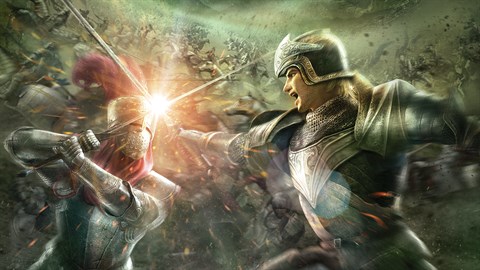
Bladestorm is a warrior-style game, in the spirit of Dynasty Warriors, where you plow your way through hundreds of weak enemy forces, taking over forts with your overpowered hero units. What sets it apart from traditional Dynasty Warrior-style games is that you do not play as a historical figure. Rather, you play as The Mercenary, a custom-created character that will switch sides at the flip of a coin to fight for either the French or the English during the Hundred Years’ War. This action of not aligning the player with either faction is an amazing way to create enduring engagement through player choice. The player might side with the English in one mission, absolutely decimate the French, and then in the next mission they join the French side because of increased rewards or triggered storylines. But due to their previous mission, now they start at a large disadvantage. The map is shaped by the player’s actions during gameplay, and their consequences follow them to the next mission they choose to partake in.
This dynamic of back and forth created by the player also allows the game to continue ad infinitum without the need for constant interjection of new content. The game can reuse locations, characters, and scenarios as the tide of war changes sides. By providing the player with an adequate minute-to-minute game loop and narrative or mechanical rewards, the player engagement can be compared to that of any roguelite game. Bladestorm achieves this through three major ways. First, as the player plays, they will come into contact with historical figures whose stories they help to achieve through scripted objectives in the regular regional maps they’ve been fighting across. Secondly, the game encourages continued play by expanding the roster of units the player can take control of. Unlike Dynasty Warriors, which has each hero with a dedicated fighting style that they will always adhere to, Bladestorm allows the mercenary to swap between any units found on the battlefield and take control of them. As the game progresses, the variety of units expands from across time and continent. You may start as a regular English soldier, then become a Viking, a Roman legionary, or an Indian elephant rider; the world is your oyster as far as combat style and role-play potential. Lastly, as the player grows in power, the regions of the game unlock, providing more maps and giving the player a variety of locations and objectives they can overcome.
Many of these elements share common ground with roguelite games; each battle is slightly different, and the player becomes stronger over time. However, the main difference is that the game does not reset at the end of the battle but is then shaped by the player’s actions in the last encounter. This continuity that shapes the future combat and story sequences is what makes this implementation of the conquest mode special. It can be argued that games like Hades, which have a narrative and mechanical progression, already achieve this, but the differentiator of this mercenary conquest-style gameplay is that the world map itself is affected by the player’s actions, which is something roguelite games stray away from. In roguelite games, each run is seeded and different, while Bladestorm’s world is continually affected by the result of the player’s action in it.
Conquest mode has been successful in the games that implement it; the RTS games that have embraced it keep their players for hundreds if not thousands of hours. Bladestorm is a shining example of how one of these design philosophies can be integrated into more casual action genres. The potential of this gameplay style to be a pillar in the retention-style game loop is enormous. I hope to see Bladestorm-like systems unleash the never-ending tug of war across many different universes and gameplay styles and conquer the gamers’ hearts.
 Orczuk