Modern big budget AAA games spend millions of dollars to feed your eyes the splendor of breathtaking visuals. However, all this effort becomes meaningless as players spend most of their time viewing these sights through a monochrome filter; exposing how empty and shallow the worlds the players are engaging truly are. Eagle Vision, Detective Mode, or whatever name a game may give it, was intended as an alternative gameplay mode to bring slow-paced deduction puzzles to the player. Instead, it has become a crutch that games use to enable interaction in mostly non responsive worlds, rather than naturally exploring and finding what you need, you will be sent on scavenger hunt and without these overlays you’d never find the specific rock, flower, or some miscellaneous item needed to progress the story forward.
Older games featured clear markers: circles indicating where to stand to start missions, letters, or icons floating in the game world to signify interactable objects. These visual cues formed a language that was immediately understandable. An agreement between the game and the player about what the player can and can’t do within the game’s bounds. Unfortunately as time marched forward the old visual language has often been dismissed as too “gamey” and immersion-breaking, relegating them to “arcadey” titles like Fortnite and leaving the “serious” games to speak to the player by giving them omission like power to see through walls.
Games like Horizon Zero Dawn and Mass Effect introduce in-world explanations, such as scanners or AI systems, to appease the immersion breaking action of becoming an all seeing being. Which also tends to involve slowing down the player movements and forcing the player to painstakingly examine every square inch of the environment to find the one object of importance. While some might argue this approach encourages players to appreciate the art, it often does the opposite, as the visual filter hides the details, signaling that they’re unimportant and shouldn’t be focused on. This system diminishes both the artistic and gameplay value it aims to enhance.
It also exposes the lack of interactivity in these vast worlds. Eagle Vision reveals the facade behind the pretty graphics: these aren’t worlds where every action has a meaningful reaction. They’re empty spaces filled with dark voids where the primary interactions are combat, looting, and reading lore entries. Players may explore these worlds but can they truly see them when spending most of their time searching for loot through a monochrome filter?
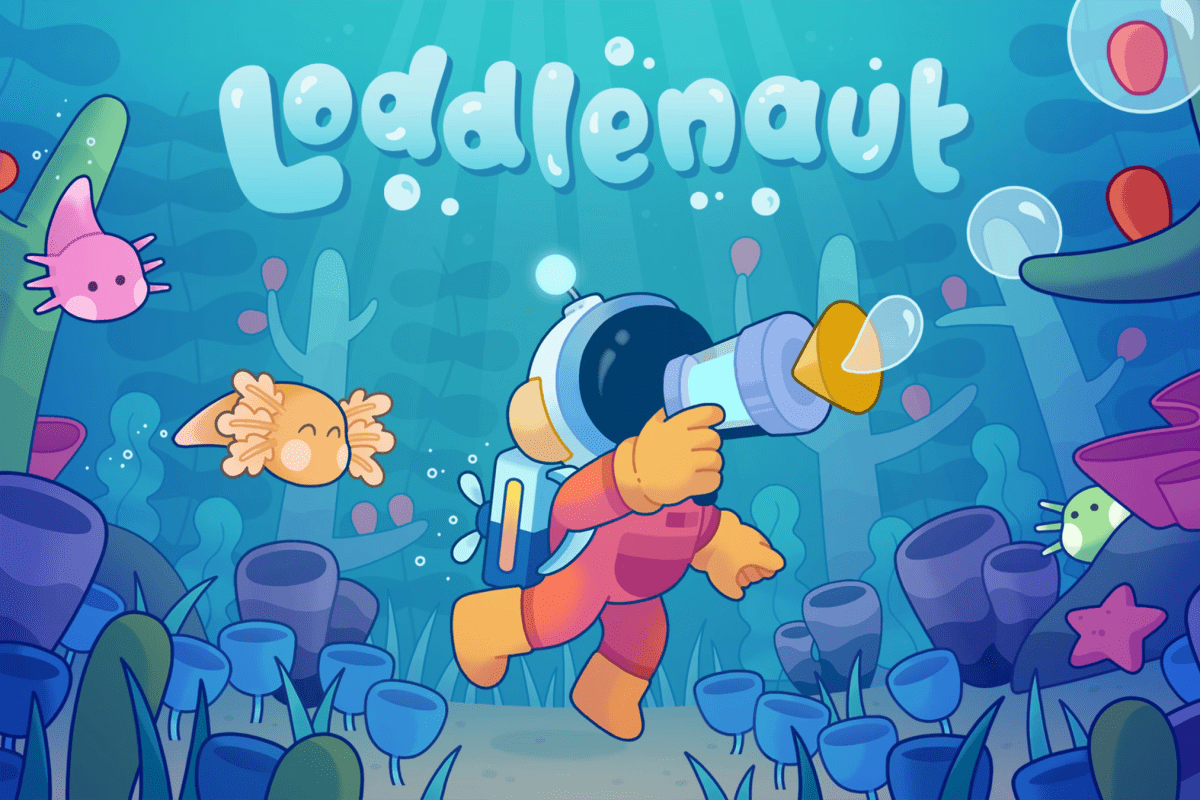
Contrast this with Loddonaut, a small indie game about an underwater ocean cleaner, which tackles a similar issue. While it’s not a one-to-one comparison, the game’s interactable objects are immediately identifiable due to their exaggerated size and stylized design. Floating plastic, metal, and glass litter the sea, while sludge covers the ocean floor. These objects stand out against the sandy seabed and colorful reefs.
In Loddonaut, you work to restore the seabed by transforming a dark, gray reef into a vibrant habitat for new fish. If you miss a piece of trash, the game doesn’t resort to a typical gray-out system to highlight objects. Instead, it offers a chargeable pulse that reveals object outlines in different colors based on the trash type. This system doesn’t obscure the game world, slow down movement, or force players into a special mode. It serves as a quick indicator of where to go, allowing players to seamlessly locate objectives that visually stand out against the environment.
This approach isn’t limited to lower-fidelity games. Journey to the Savage Planet is an AA game with visuals that rival AAA titles while maintaining the clarity of Loddonaut. It incorporates both an Eagle Vision and a ping system similar to Loddonaut’s. The game uses Eagle Vision sparingly, only to gain secondary information on newly encountered flora and fauna, without it having any significant part on player interaction with the world. This allows the game’s stellar art direction, which uses specific shapes, colors, and subtle sparkles to guide players’ attention as they explore the world. Built on top of that is the assistance of the pinging system, similar to that of Loddonaut where you send a signal and then see icons pointing the player in the direction of missed collectibles. You can easily traverse and interact with the world without relying on filters to guide your journey.
Both Loddonaut and Journey to the Savage Planet offer players a clear visual language that eliminates the need for tedious pixel hunting while preserving immersion. I understand the desire to make games more cinematic and realistic looking, however in pursuit of beauty we have lost the ability to see the world. Over-reliance on Eagle Vision-like systems undermines both gameplay and artistic intent. Games and players should communicate in the same visual language as the game culminating in a flow state of joy.
 Orczuk