Fighting Games: Narrative Rewards

Fighting games are an intimidating genre to get into, it’s like chess but your fingers need to be a hundred times more nimble and instead of one opponent you have to be ready for dozens. Yet as of last year, I’ve started playing them. I never really had much of an interest, as I’m fairly bad at them, and being mechanically proficient at a game is not something that interests me very much. So, I didn’t play fighting games much until I discovered the animated Mortal Kombat movies, which introduced me to the brutal setting and characters. It was a hook I didn’t know I needed. I ended up getting MK 11, played the story mode, and had a good time, however, since I’m not striving to get great at combat but just experience the story and characters, I shortly stepped away from it.

The game has an arcade mode that offers small ending rewards for each character, but because the story of the game is very meta-narrative, most character endings involve them becoming gods and shaping the universe in their image. This usually meant that all good characters had similar endings, and all bad characters had their own predictable conclusions. While it served as a reward, it didn’t offer much insight into the characters’ personalities or motivations, so I didn’t bother playing through all the endings. I tried multiple other fighting games with similar results. I’d quickly put them down before even trying out all the characters. 

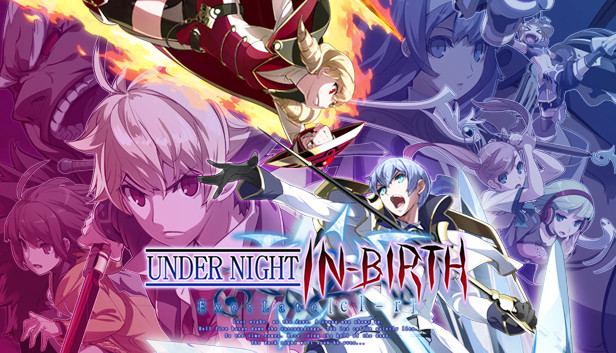
Then I found two games by the developer Soft Circle French-Bread that had me hooked for hours longer than any other: MELTY BLOOD: TYPE LUMINA and UNDER NIGHT IN-BIRTH Exe:Late. Both are beautifully animated pixel-art fighting games with very out-there stories that are kind of hard to follow but captivating enough to pull me in. I ended up beating the story mode and additional arcade modes in both games so I could learn more about the characters and settings. Afterward, I even started looking online for explanations of the lore to confirm my ideas about the characters and the world.

With this inspiration I want to explore how these games’ very simple narrative rewards kept me engaged, unlike the major fighting game titles.

Let’s first talk about the presentation. Games like Mortal Kombat and Tekken have very fancy production with fully animated 3D cutscenes, whereas games like MELTY BLOOD: TYPE LUMINA and UNDER NIGHT IN-BIRTH Exe:Late tell their stories through visual novel segments. Simple character cutouts talking to each other with voice acting layered on top. The production value is clearly better in the big games, but I think it also holds itself back because of it.

Since the cutscenes in 3D are more involved, the amount of story content they can include is limited. That leads to smaller, less frequent story beats. On the other hand, the visual novel style allows for small cutscenes between characters every few fights. This means that each character gets much more extended screen time, giving every character more time to shine. Seeing the different interactions between characters exposed me to different parts of that characters’ personalities which motivated me to try them across the story and arcade modes.

I understand that this method of storytelling isn’t for everyone. Visual novels require people to read for an extended period and it can become a chore. I personally won’t read visual novels unless they have some kind of active gameplay mechanic and voice acting to help along with the reading. Great examples of this are the 999 series and Professor Layton, where the player alternates between visual novel storytelling and puzzle-solving gameplay. I think that oscillation between active and passive gameplay works fantastically, and due to the lower production workload, it allows for more story content that the player can actively engage with.

In contrast to the name brand and recognition and familiarity of games like Mortal Kombat I had no idea what the games were about, who the characters were, or what the plot of the story was for MELTY BLOOD: TYPE LUMINA and UNDER NIGHT IN-BIRTH Exe:Late. Yet, even though it had a lower production value I’ve come to be interested in the world and character far more than that of its high budget counterparts. Putting in significantly more hours into these games because their extensive narrative kept me hooked. 

I found it fascinating to piece together the relationships between characters based on their cutscenes. Realizing things like, “Oh, this character is that character’s sister,” or “This one is the arch-nemesis,” or “Oh, there are vampires in this world and a holy order fighting them, and it’s all happening in this small town in Japan.” Thanks to the visual novel style, each character gets to build a rapport with a few others, and the web of relationships builds in your head. Thanks to the amount of cutscenes that the game provisioned I got to see different sides of characters depending on who they were interacting with. This is in stark contrast where in MK or Tekken you’re most likely to see the protagonists’ relationship explored but very little for the side characters. 

Now, due to alternative endings across the arcade mode, the overarching story isn’t always clear, but the world and characters are established strongly enough to make you want to learn more and keep you coming back even after you finished the story mode. 

As I continue developing games, I want these narrative techniques alive in my games. Giving players a strong setting, characters and allowing them to experience those relationships over a longer time, even if it means sacrificing flashy presentation. I would be happy to play a few matches to see how Character A and Character B play off each other in a given story context. Each character has the potential to be someone’s favorite, let’s not waste that opportunity by sending them into a throng of meaningless matches without any payoff.
Bladestorm: The Dynamic Gameplay of Conquest Mode

In the age of retention and engagement, players’ time is won through roguelite gameplay, long checklist open worlds, or carrot-on-stick rewards like battle passes of live services. Yet, there exists a gameplay mode that could become a pillar of retention-driven games but is overlooked by the gaming community: Conquest mode. It’s a game mode where two or more factions are spread out across a map, and the factions play tug-of-war with resources and plots of land, slowly snowballing your faction into an unstoppable force that lets you color the map with your faction’s banners. This gameplay style is still fairly popular in RTS games created by Paradox Interactive, such as Crusader Kings, Europa Universalis, and Hearts of Iron. However, RTS games can be a hard medium to penetrate, even for the most experienced gamers. The amount of rules, strategies and time sink required to master them is fairly intimidating and unfortunately gatekeeps this interesting game mode from the general population. But, there is a game that allows for this kind of gameplay with a twist of action which allows even the most casual gamers to enjoy. That game is Bladestorm.

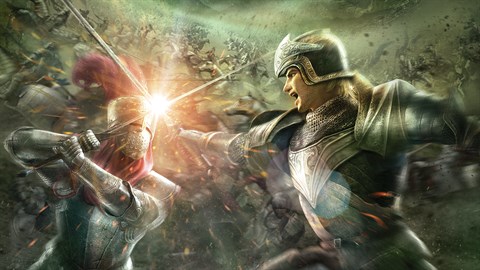
Bladestorm is a warrior-style game, in the spirit of Dynasty Warriors, where you plow your way through hundreds of weak enemy forces, taking over forts with your overpowered hero units. What sets it apart from traditional Dynasty Warrior-style games is that you do not play as a historical figure. Rather, you play as The Mercenary, a custom-created character that will switch sides at the flip of a coin to fight for either the French or the English during the Hundred Years’ War. This action of not aligning the player with either faction is an amazing way to create enduring engagement through player choice. The player might side with the English in one mission, absolutely decimate the French, and then in the next mission they join the French side because of increased rewards or triggered storylines. But due to their previous mission, now they start at a large disadvantage. The map is shaped by the player’s actions during gameplay, and their consequences follow them to the next mission they choose to partake in.

This dynamic of back and forth created by the player also allows the game to continue ad infinitum without the need for constant interjection of new content. The game can reuse locations, characters, and scenarios as the tide of war changes sides. By providing the player with an adequate minute-to-minute game loop and narrative or mechanical rewards, the player engagement can be compared to that of any roguelite game. Bladestorm achieves this through three major ways. First, as the player plays, they will come into contact with historical figures whose stories they help to achieve through scripted objectives in the regular regional maps they’ve been fighting across. Secondly, the game encourages continued play by expanding the roster of units the player can take control of. Unlike Dynasty Warriors, which has each hero with a dedicated fighting style that they will always adhere to, Bladestorm allows the mercenary to swap between any units found on the battlefield and take control of them. As the game progresses, the variety of units expands from across time and continent. You may start as a regular English soldier, then become a Viking, a Roman legionary, or an Indian elephant rider; the world is your oyster as far as combat style and role-play potential. Lastly, as the player grows in power, the regions of the game unlock, providing more maps and giving the player a variety of locations and objectives they can overcome.

Many of these elements share common ground with roguelite games; each battle is slightly different, and the player becomes stronger over time. However, the main difference is that the game does not reset at the end of the battle but is then shaped by the player’s actions in the last encounter. This continuity that shapes the future combat and story sequences is what makes this implementation of the conquest mode special. It can be argued that games like Hades, which have a narrative and mechanical progression, already achieve this, but the differentiator of this mercenary conquest-style gameplay is that the world map itself is affected by the player’s actions, which is something roguelite games stray away from. In roguelite games, each run is seeded and different, while Bladestorm’s world is continually affected by the result of the player’s action in it.

Conquest mode has been successful in the games that implement it; the RTS games that have embraced it keep their players for hundreds if not thousands of hours. Bladestorm is a shining example of how one of these design philosophies can be integrated into more casual action genres. The potential of this gameplay style to be a pillar in the retention-style game loop is enormous. I hope to see Bladestorm-like systems unleash the never-ending tug of war across many different universes and gameplay styles and conquer the gamers’ hearts.

Immortals Fenyx Rising: Less is More

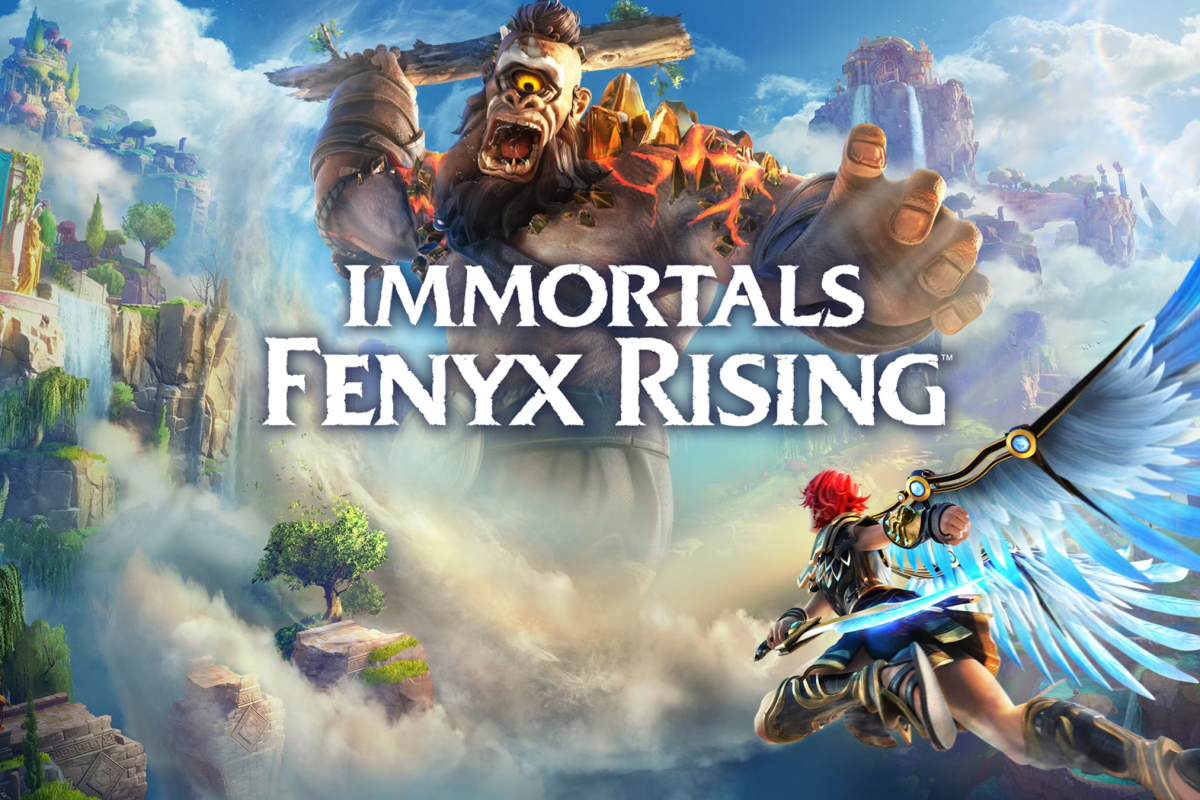
There is such a thing as too much of a game, obfuscating the greater aspects by cluttering it with unnecessary or bloated features. A great example of that would be Immortals Fenyx Rising, Ubisoft’s response to Breath of the Wild with a twist. I’d argue that Fenyx Rising is a fantastic puzzle platformer that gives its inspiration a run for its money, if not outright outshining it in the puzzle aspect. However, Ubisoft’s key open-world designs put the game in a swampy situation where you have to slog through uninspired world traversal and repetitive combat to get a glimpse of the fun.

Like Breath of the Wild, Fenyx Rising has a scattering of temples where you will be tested on your puzzle, platforming, or combat skills to gain upgrades for the player’s stats. Pretty standard affair. The game really shines in its open-world constellation puzzles. The best showcase of one of these was in Aphrodite’s Temple. You enter a grand space with an assortment of small contraptions. As you wander around, you find a display that shows you the placement and number of orbs you need to create a constellation and a grid where the orbs will go. The orbs are scattered throughout the temple; you most likely noticed some of them as you made your way through it or even unlocked some by just fiddling with the nearby puzzles. They test out different aspects of your character’s abilities, and once brought together create a constellation and unlock lore dedicated to Aphrodite. It’s a perfect self-contained area that fosters curiosity and encourages exploration by giving the player one large goal connected by a list of smaller ones without the need for a checklist or pointing the player directly to the task (although there is an option to do that by lowering the difficulty of the puzzles if the player needs it). It really engages the player by showing a goal and making them find the solutions to it.

The game knows that the puzzles are its major strength, as each of the four gods who you rescue throughout your adventure ends with a massive puzzle world, each containing its own mechanic that’s exclusive to the boss puzzle area. However, the journey to unlocking these puzzles can be a massive slog. At first, the combat was fairly fun. You get to challenge yourself against the enemies as you are under-leveled and everything is a threat. However, as the game continues, the enemies stay the same mechanically but only scale in their stats, so as the game progresses, the fighting stays static if not annoyingly grindy. Towards the end of the game, I ended up lowering the difficulty of the combat because fighting the same enemy felt like I was wasting time. You don’t really receive any rewards from fighting and only lose resources in the process, so it’s completely disincentivized unless it’s necessary to access a puzzle area.

This frustration is compounded by the open world. In usual Ubisoft fashion, the map is extremely large and filled with filler content that pads the run time. It’s not necessary to do any of it, but there is an itch in the gamer brain that the map should be cleared of these icons, and you start to toil away on the forgettable combat scenario number #154. This icon clearing also inhibits one of the main aspects of the game Fenyx Rising is mimicking: looking into the distance and seeing something cool you want to explore. Because the game is bogged down by the icon clearing, the player’s journey is a straight line from point A to B rather than bumbling around discovering neat areas. The core traveler’s loop is also in no way iterated upon. In Breath of the Wild, some areas would have rain, cold, heat, lightning striking, obstacles that prevented the player from doing the basic A to B. However, pretty much everything is static in Fenyx Rising regardless of zone and time, so you will climb everything in the same manner from the start of the game until the end of it.

Now don’t get me wrong—I wouldn’t absolutely gut these systems, as downtime between solving puzzles is good. Some time for the brain to rest is necessary to avoid burning out from thinking. However, it’s just too much. I almost didn’t finish the game because I was so worn out from the experience. Bigger and longer doesn’t mean the game is better or that there’s a worthwhile experience to partake in; it just means there is more, which itself is meaningless. This game deserved more linear segments combined with medium-sized open areas, something akin to the new God of War to truly shine.

Immortals Fenyx Rising could have been a new jewel in Ubisoft’s crown. It has the strong puzzle design that is engaging and well thought out, a competent combat system that can provide a good reprieve from the puzzles for the time being, and the evergreen story theme of visiting different gods and cultures. If only it had tightened its belt and lost some of Ubisoft’s open-world tendencies, it could have been a long-running franchise. Unfortunately, as of now, the next installment of the series has been canceled, and the team behind it has been shuffled among other teams at Ubisoft. Hopefully, the talented people behind the project get to showcase their skills on something great soon.